In a tall building, warm air rises to the roof while staff stand freezing at floor level. Infrared radiant heating turns this around: it heats the floor, machinery and people directly – and only then the air. Arne Nielsen A/S can now supply and design infrared heating systems from German manufacturer Schwank.
Why conventional heating is expensive in tall buildings
Warm-air heaters and radiators heat the air. In a building with a ceiling height of 6–10 metres, the warmest air collects where nobody works. Every time a door opens, much of the heated air escapes – and has to be heated again.
Infrared radiant heat works like the sun: the radiation passes through the air and only releases its heat when it strikes the floor, equipment and people. The floor becomes a heat store, and the perceived temperature at the workplace is high, even when the air under the roof is cool.
Where does it make sense?
Gas-fired infrared heating is best suited to buildings with a ceiling height of approx. 4 metres or more and access to gas. Typical examples:
- Machinery sheds, workshops and livestock buildings on farms
- Warehouses and logistics buildings with doors that are often open
- Car, truck and machinery workshops
- Production halls with zones that need different temperatures
- Sports halls and riding arenas that only need heating when in use
If the building is lower, or there is no gas, electric infrared heating (eSchwank) or a heat pump may be the right answer. We will assess this with you based on the site survey form below.
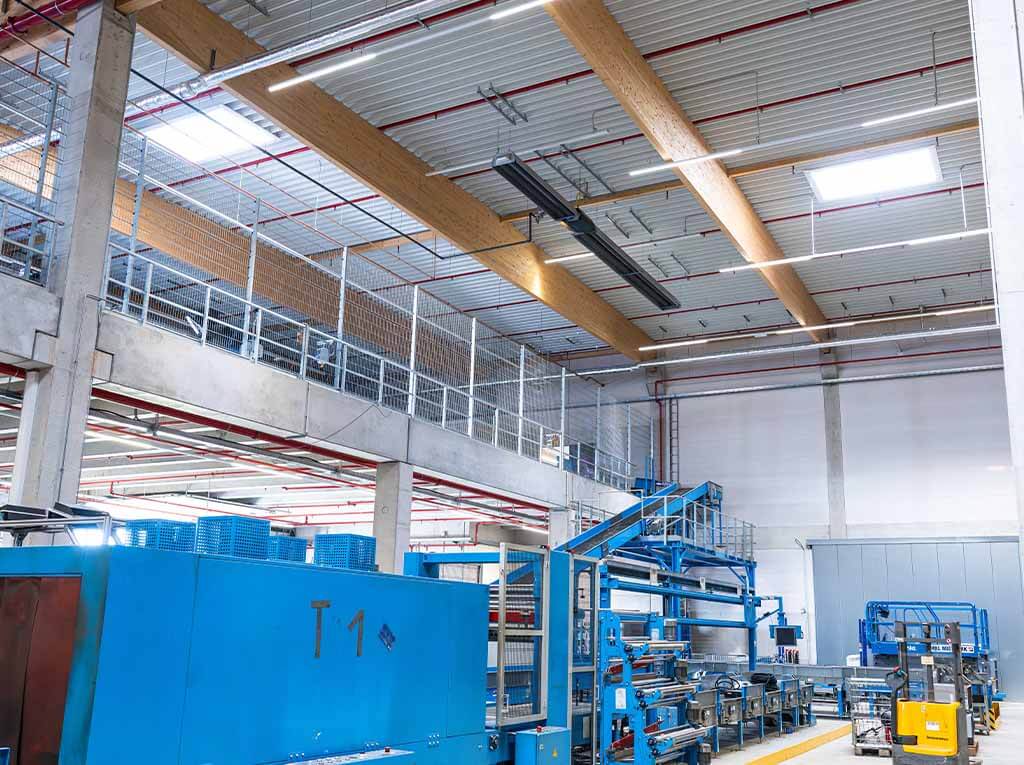
The Schwank range
Schwank has been developing gas-fired infrared heating for more than 90 years and has over 2.5 million units installed in more than 40 countries. The range includes:
- geniumSchwank – modulating radiant tube heater (15–48 kW) with seasonal efficiency of up to 99 % and low NOx emissions. According to the manufacturer, it can later be converted to hydrogen when the time comes.
- supraSchwank and primoSchwank – ceramic plaque heaters for great heights and stadiums.
- eSchwank – electric infrared heating for zone heating where there is no gas.
The gas-fired radiant heaters are certified under the EU Gas Appliances Regulation (EU) 2016/426 in appliance category II2H3B/P.
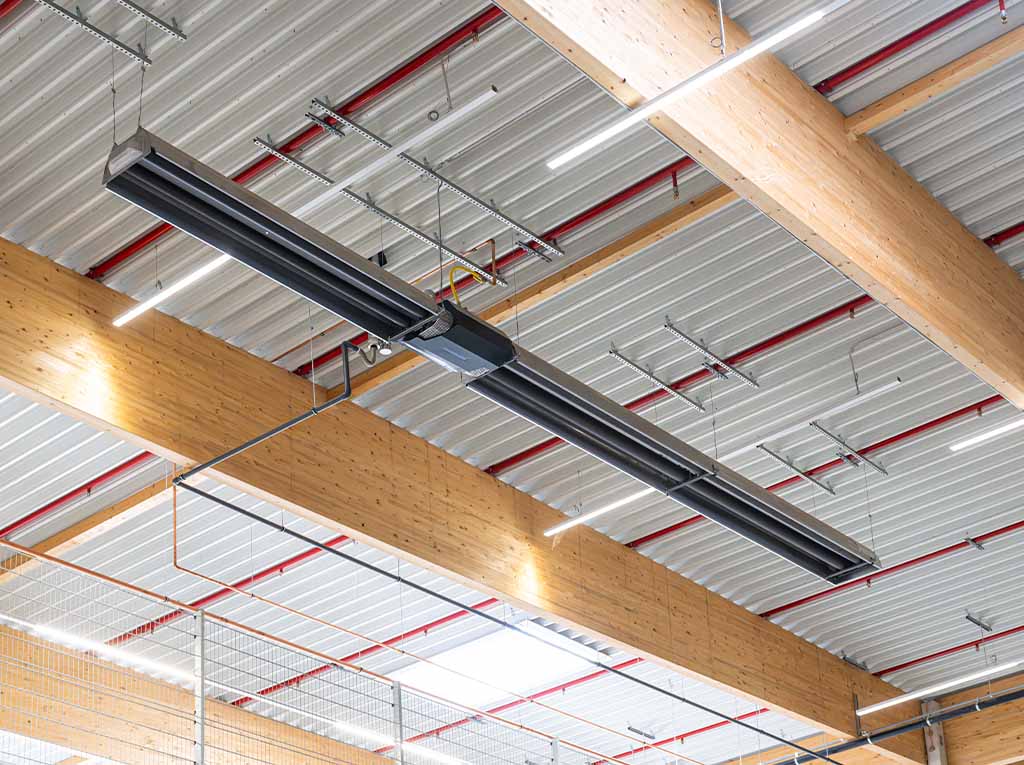
Biogas and the green transition
Biogas is playing a growing role – in Denmark, a large and rising share of the gas in the grid is already biogas. A modern, modulating gas radiant heater uses only the energy needed, and only in the zones in use. That makes infrared heating a concrete contribution to the green transition for businesses with large, tall buildings.
How we work: projects, not price lists
Heating for large buildings is not sold off the shelf. Every system is sized for the specific building:
- You fill in the site survey form at the customer’s premises – it takes 15–20 minutes.
- We send the details to Schwank’s technical department, which sizes the system with layout, flue design and bill of materials.
- You receive a complete quotation from us.
- The installer fits the system – and service and spare parts are handled by Arne Nielsen A/S.
Download the site survey form
Do you or your customer have a cold building? Download the site survey form, fill it in on site and send it to us at info@arnenielsen.dk together with photos of the building. You will receive a sized proposal.

